
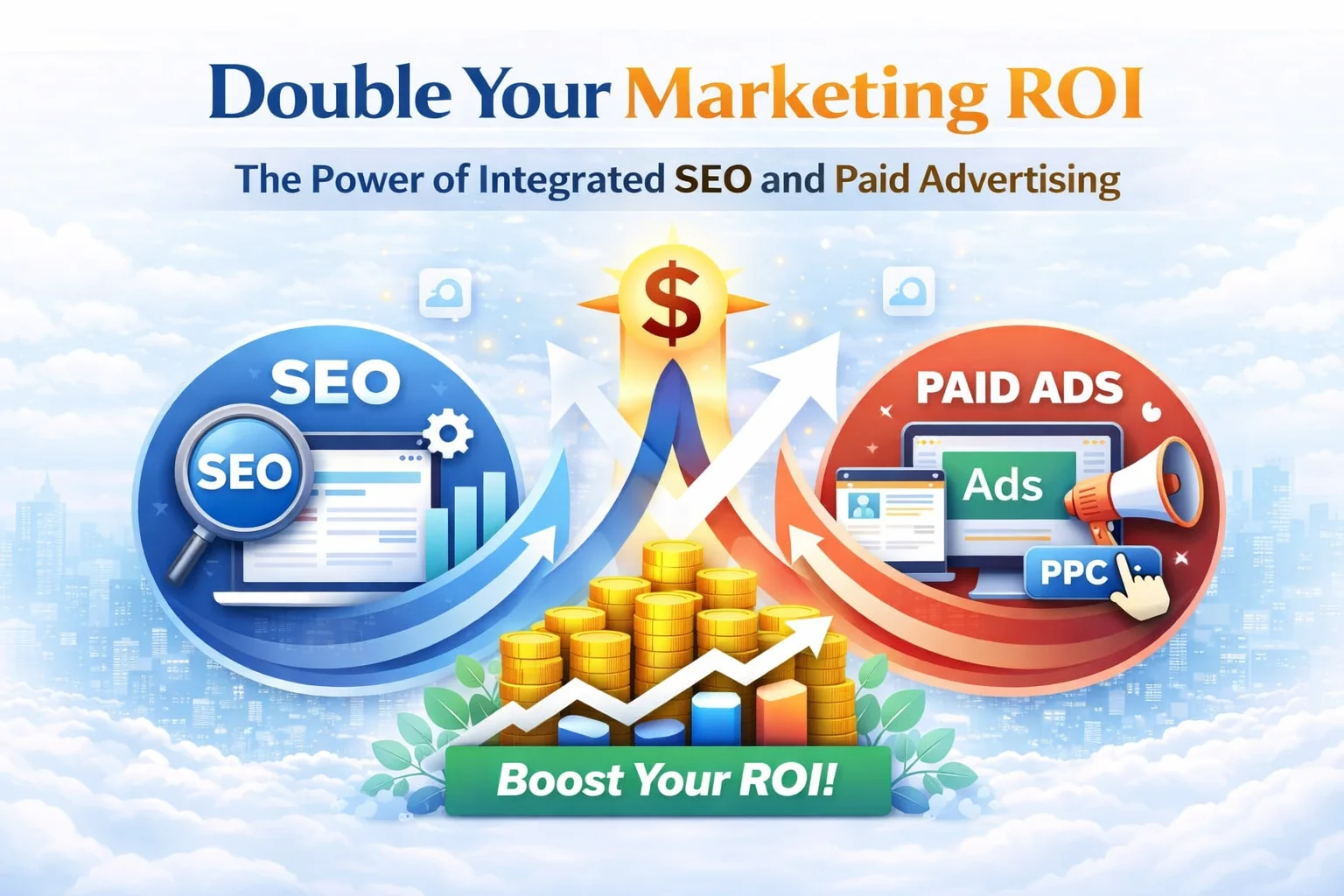
Why Choose Between SEO and Paid Advertising When You Can Leverage Both?
Imagine generating immediate leads from Google Ads while simultaneously building long-term organic traffic that compounds month after month. Your cost per lead drops consistently, your conversion rates improve, and you’re not dependent on any single channel. This isn’t a dream—it’s what happens when you strategically combine SEO and paid advertising.
At codExalters Techlabs, we don’t believe in the “SEO vs Paid Ads” debate. We believe in smart integration. Our clients who use both strategies see 3x better ROI than those relying on just one. Here’s why the combination is unbeatable and how to make it work for your business.
The Reality: Why Single-Channel Strategies Fall Short
Most businesses make a critical mistake—they view SEO and paid advertising as competing strategies. In reality, they’re complementary powerhouses that amplify each other’s effectiveness when used together. Think of it like building a house: paid ads are your scaffolding (immediate support), while SEO is your foundation (long-term stability).
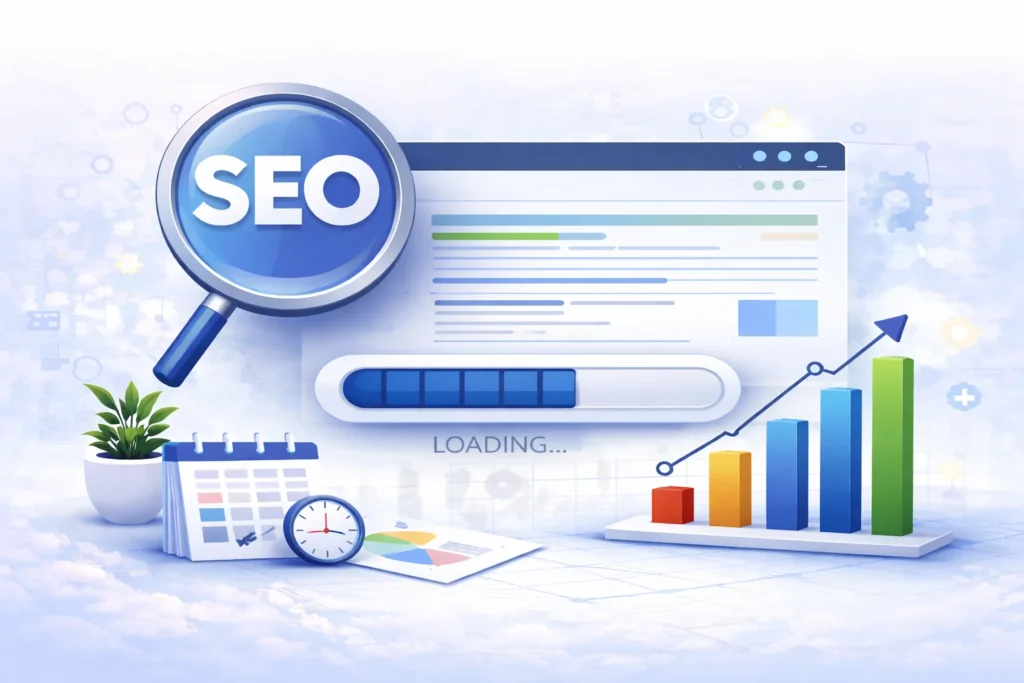
Why SEO Alone Isn’t Enough?
SEO is incredible for sustainable, long-term growth, but it has limitations. It takes 3-6 months to see significant results, you can’t control which keywords you rank for immediately, it’s difficult to scale quickly during peak seasons, and competitive keywords may take years to rank for. A new e-commerce startup relying only on SEO might wait 6-8 months before seeing meaningful traffic, missing crucial launch momentum and seasonal opportunities.
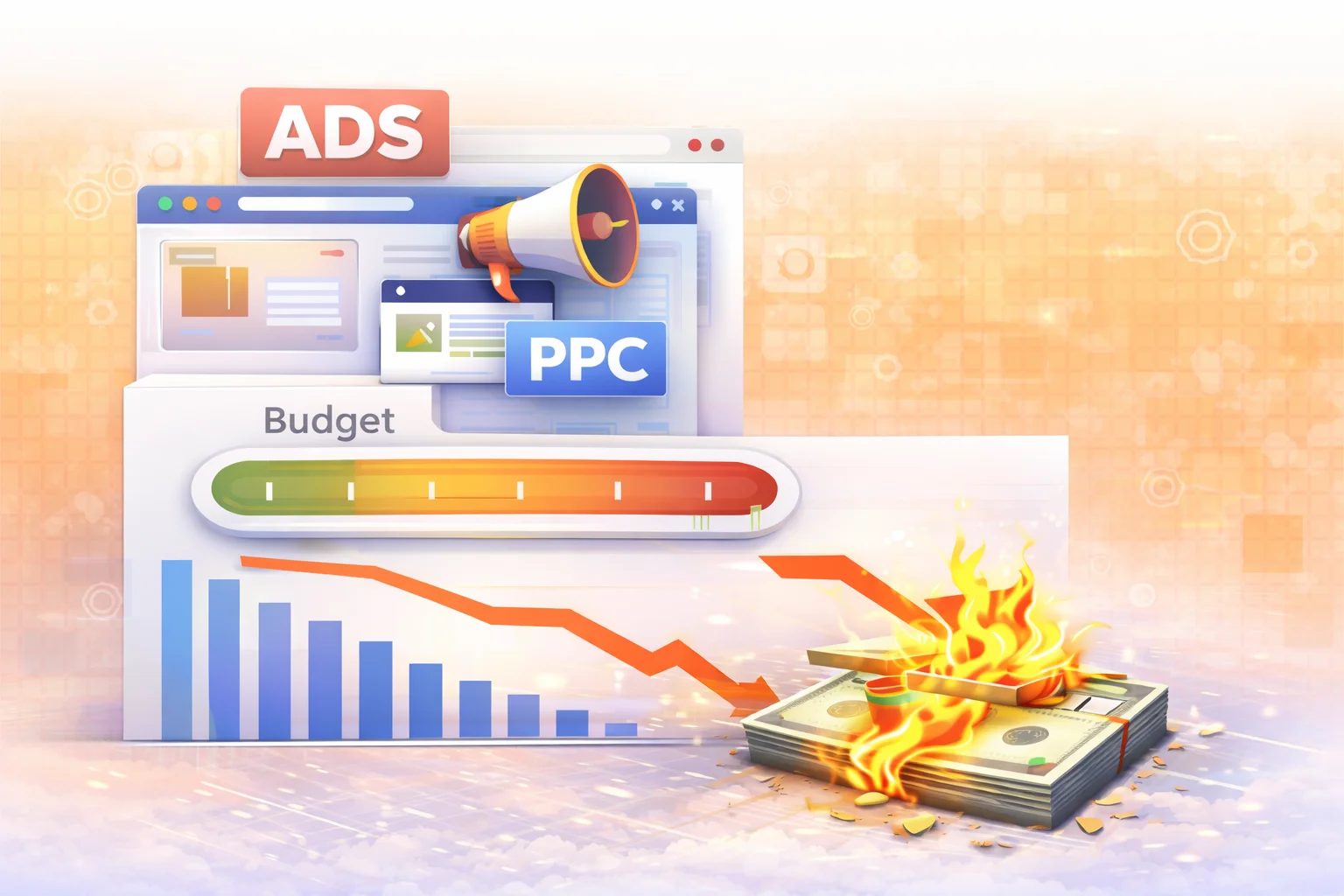
Why Paid Ads Alone Aren’t Sustainable?
Paid advertising delivers immediate results, but without SEO, you’re building a business on rented land. Costs increase 20-30% year-over-year as competition grows, traffic stops immediately when budget runs out, there are no compounding benefits, ad fatigue reduces effectiveness over time, and you have complete dependency on platform algorithms. A B2B company relying solely on ads gets zero leads the month their budget is cut. Years of ad spending builds no lasting asset.
7 Ways SEO and Paid Ads Create Powerful Synergy
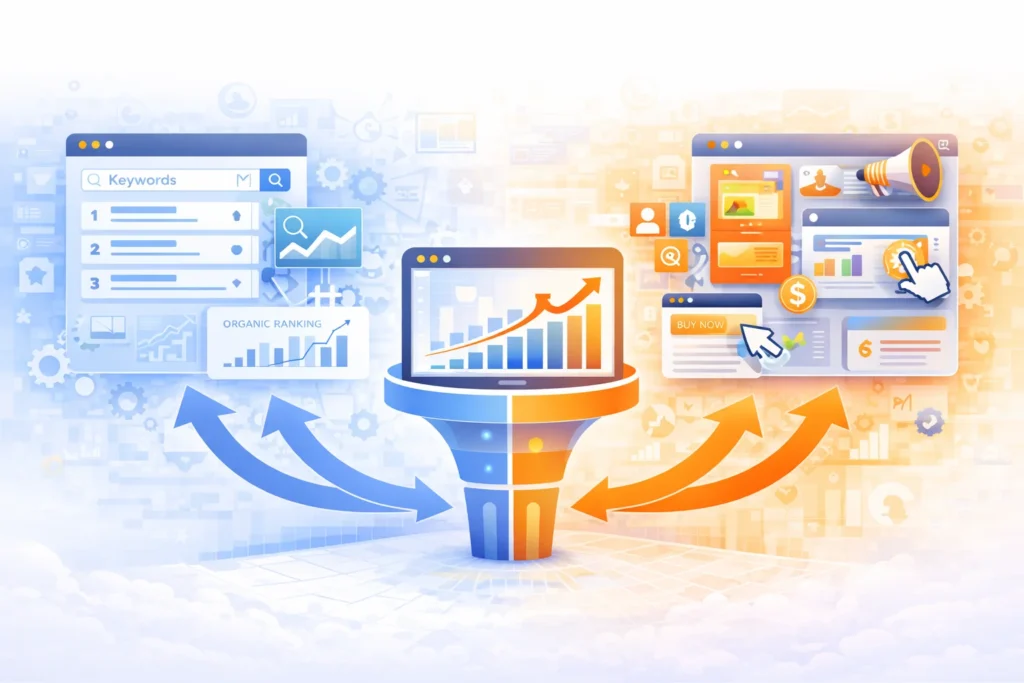
When strategically combined, SEO and paid advertising create a marketing ecosystem where 1+1=3. Here’s how they work together:
1. Immediate Results While Building Long-Term Assets
The Strategy: Launch paid ad campaigns on day one to generate immediate leads and revenue. Simultaneously, invest in SEO content and optimization. As your organic rankings improve over 3-6 months, gradually reduce ad spend while maintaining or increasing lead volume.
How It Works:
- Month 1: Launch Google Ads for instant visibility and leads
- Months 1-3: Build SEO foundation with keyword research, technical optimization, and initial content
- Months 4-6: Organic traffic starts contributing, reduce ad spend by 20-30%
- Months 7-12: Organic provides 40-50% of leads, reduce ad spend further
- Year 2+: Organic dominates, ads fill strategic gaps
Example: A SaaS startup launched with Google Ads from day one while building SEO. By month 6, organic traffic provided 40% of leads. By month 12, they reduced ad spend by 60% while total leads increased by 60%.
ROI Impact: Immediate cash flow from ads funds the SEO investment. As organic grows, customer acquisition costs drop by 50-70% while maintaining lead volume. The business becomes profitable and sustainable rather than dependent on continuous ad spending.
2. Test-and-Validate Keyword Strategy
The Strategy: Use paid search data to identify which keywords actually convert before investing heavily in SEO. Instead of guessing what to optimize for, let your ad campaigns reveal the highest-value keywords based on actual conversion data.
How It Works:
- Run Google Ads campaigns across 50-100 relevant keywords
- Track conversion rates, cost per acquisition, and customer quality for each keyword
- After 30-60 days, identify the top 10-15 keywords with best conversion rates
- Create comprehensive SEO content specifically targeting those proven converters
- Continue running ads on high-value keywords while SEO rankings build
- Once ranking organically in top 3, reduce or eliminate ad spend on those keywords
Example: An EdTech company discovered through paid ads that “online UPSC coaching Hindi” converted 5x better than “UPSC preparation.” They optimized SEO for the Hindi variant and now rank #1 organically, significantly reducing advertising costs for that high-value keyword.
ROI Impact: Testing keywords with paid ads eliminates guesswork in SEO strategy. You invest SEO resources only in keywords proven to convert, dramatically improving SEO ROI. The small testing investment via ads saves months of SEO work on low-converting keywords.
3. Dominate Search Results with Dual Presence
The Strategy: Appear in both paid and organic results for your most valuable keywords. Studies show that combined presence increases total click-through rate by 50% compared to appearing in just one section.
How It Works:
- Identify your top 20 highest-value keywords based on conversion and revenue data
- Run targeted paid ads to secure top-of-page sponsored placement
- Create pillar content and optimize to rank organically for the same terms
- Monitor both ad performance and organic rankings continuously
- Adjust ad budgets based on organic position (higher organic = lower ad spend)
- Optimize both paid ads and organic listings for maximum click-through rate
Example: A real estate platform appearing in both ads and organic results for “flats in Bangalore” saw 89% higher total clicks than competitors appearing in only one section. Users perceived them as the market leader due to dual visibility.
ROI Impact: While paying for ads on keywords you rank for organically seems redundant, the 50% increase in total traffic often justifies the dual investment for high-value terms. The combined visibility establishes market dominance and builds trust faster than single-channel presence.
4. Convert Organic Visitors with Retargeting
The Strategy: Most organic visitors don’t convert on their first visit. Use paid retargeting ads to bring them back and convert them into customers, maximizing the value of your SEO investment.
How It Works:
- SEO drives qualified organic traffic to your website
- Install tracking pixels to monitor visitor behavior and pages visited
- Segment visitors based on their interests (products viewed, content read, time spent)
- Create specific retargeting ads addressing their interests and objections
- Show testimonials, limited-time offers, or educational content
- Track which organic visitors convert via retargeting
Example: A B2B software company found that only 2% of organic visitors converted immediately. By retargeting the other 98% with ads showcasing customer success stories and ROI calculators, they increased total conversion rate from organic traffic to 8%—a 4x improvement.
ROI Impact: Retargeting warm organic traffic costs 60-80% less than acquiring cold traffic through ads. You’re maximizing the return on your SEO investment by converting visitors who found you organically but weren’t ready to buy immediately. Combined conversion rate of SEO + retargeting often exceeds either channel alone.
5. Boost Ad Performance with Quality Content
The Strategy: Google rewards ads that lead to high-quality, relevant landing pages with better Quality Scores—meaning lower costs per click and better ad positions. Use your SEO-optimized content to improve ad performance.
How It Works:
- Create comprehensive, SEO-optimized landing pages with relevant keywords
- Ensure pages load fast (under 3 seconds), are mobile-responsive, and provide excellent user experience
- Include detailed information, trust signals, clear calls-to-action
- Point your Google Ads to these high-quality SEO pages instead of basic landing pages
- Monitor Quality Score improvements and cost-per-click reductions
- Continuously optimize pages based on both organic and paid performance data
Example: A fintech company created detailed SEO content about “business loans for SMEs” with comprehensive information, FAQs, and testimonials. When they pointed Google Ads to this page instead of a basic form, their Quality Score jumped from 5/10 to 9/10, reducing cost per click by 44%.
ROI Impact: Better Quality Scores mean you get the same ad results for 30-50% less budget, or you can dominate more keywords with the same budget. Your SEO investment in quality content directly reduces paid advertising costs—a perfect example of synergy.
6. Amplify Proven Content with Paid Promotion
The Strategy: When SEO content performs exceptionally well organically, amplify its reach with paid promotion to maximize ROI. You’re promoting content you already know converts, reducing the risk of paid campaigns.
How It Works:
- Monitor your SEO content performance to identify top performers
- Look for high conversion rates, strong engagement, and quality lead generation
- Select the best-performing pieces for paid promotion
- Promote through Facebook Ads, LinkedIn Ads, or Google Display Network
- Target audiences similar to your organic visitors or expand to new segments
- Track incremental results from paid promotion of organic content
Example: A marketing agency’s blog post on “email marketing ROI” ranked #3 organically and converted at 12%. They promoted it on LinkedIn to reach marketing directors who might not find it organically, generating 200 qualified leads at significantly lower cost than typical cold ad campaigns.
ROI Impact: Promoting proven SEO content through paid channels combines the high conversion rate of organic content with the scale and targeting of paid advertising. You eliminate the guesswork of paid campaigns by promoting content already validated through organic performance.
7. Protect Your Brand with Combined Defense
The Strategy: Competitors often bid on your brand keywords to steal traffic from people searching for you. Combine strong organic rankings with defensive paid ads to own your brand completely and prevent competitor hijacking.
How It Works:
- Maintain strong organic rankings for all brand terms (your company name, product names, branded phrases)
- Monitor paid search results to identify competitors bidding on your brand
- Run inexpensive brand ads to occupy the top sponsored position
- Create compelling brand ad copy highlighting your unique advantages and differentiators
- Ensure your organic listing is optimized with sitelinks and rich snippets
- Block competitors from stealing your highest-intent traffic
Real Example: A SaaS company noticed competitors bidding on their brand name, appearing above their organic listing. By running their own brand ads at minimal cost, they recaptured 40% of traffic that was going to competitors, protecting significant annual revenue and customer acquisitions.
ROI Impact: Brand keyword ads typically cost very little per click (often 10-20x cheaper than competitive keywords) but convert at 30-40% rates since searchers already know and want your brand. Protecting your brand is the highest-ROI paid advertising you can do, and combining it with strong organic presence creates an impenetrable defense.
The Strategic Integration Framework
Here’s how to implement integrated SEO and paid advertising for maximum ROI:
Phase 1: Launch (Months 1-3) Focus 70-80% on paid ads for immediate results while building SEO foundation with keyword research, technical optimization, and initial content creation. Goal is to be cash-flow positive while establishing long-term assets.
Phase 2: Growth (Months 4-9) Shift to 60% paid ads and 40% SEO as organic traffic begins contributing 20-30% of leads. Scale content production, build quality backlinks, and optimize proven keywords while maintaining paid lead flow.
Phase 3: Scale (Months 10-18) Balance shifts to 40% paid ads and 60% SEO as organic provides 50%+ of leads. Focus paid advertising on highest-ROI campaigns, retargeting, and competitive terms while SEO dominates mid-funnel content.
Phase 4: Optimization (Months 18+) Settle at 30% paid ads and 70% SEO for sustainable growth. Use paid strategically for brand protection, seasonal campaigns, new product launches, and filling gaps while SEO provides the foundation.
Common Integration Mistakes to Avoid
Treating Them as Separate Strategies: Don’t have different teams managing SEO and paid ads without coordination. They must share data, insights, and strategy continuously.
Cutting Ads Completely When SEO Works: Even with strong organic rankings, strategic paid placement captures additional market share and protects against competitors.
Relying Solely on Paid Ads: Building no organic presence means you’re always one budget cut away from zero traffic. Always invest in SEO as your safety net and growth engine.
Expecting Identical ROI Timelines: SEO has delayed gratification with compounding returns. Paid ads offer immediate but linear returns. Measure them differently but value both.
Not Sharing Data Between Channels: Your paid ad conversion data should inform SEO targeting. Your organic keyword rankings should guide ad strategy. Integration requires information flow.
Why Choose codExalters Techlabs?
We specialize in integrated SEO and paid advertising strategies that maximize ROI. Our approach includes:
Comprehensive SEO Services:
✓ Strategic keyword research and competitive analysis
✓ Technical SEO optimization for maximum performance
✓ High-quality content creation that ranks and converts
✓ Authoritative link building and digital PR
✓ Local SEO for location-based businesses
✓ Continuous optimization and detailed reporting
Expert Paid Advertising Services:
✓ Google Ads management (Search, Display, Shopping, YouTube)
✓ Social media advertising (Facebook, Instagram, LinkedIn)
✓ Retargeting and remarketing campaigns
✓ Landing page optimization for conversions
✓ Advanced tracking, attribution, and analytics
✓ Budget optimization and performance reporting
Integrated Strategy:
✓ Unified approach maximizing both channels
✓ Real-time data sharing between SEO and paid campaigns
✓ Continuous cross-channel optimization ✓ Single point of accountability for all search marketing
✓ Transparent reporting showing each channel’s contribution
✓ Dynamic budget allocation based on performance
The Bottom Line
The most successful businesses don’t debate “SEO vs Paid Ads”—they master both and use them strategically. Paid advertising gives you speed, control, and immediate scale. SEO gives you sustainability, credibility, and compounding returns. Together, they create an unstoppable growth engine that delivers:
Immediate results from paid ads while building SEO foundation for the future
Decreasing customer acquisition costs as organic traffic grows and reduces ad dependency
Market dominance through combined visibility in search results that competitors can’t match
Strategic flexibility to scale up or down based on business needs and market conditions
Data-driven decisions informed by insights from both channels working together
Sustainable growth that isn’t dependent on any single traffic source or platform
The question isn’t which channel to choose—it’s how to integrate them for maximum impact and ROI.
Ready to build a complete search marketing strategy that leverages both SEO and paid advertising?
Contact codExalters Techlabs for a free consultation. We’ll analyze your current marketing, identify opportunities in both SEO and paid channels, and create a custom integrated strategy that maximizes your return on investment.
Stop limiting yourself to one channel. Start dominating your market with the power of both.
About codExalters Techlabs: We’re a full-service digital marketing agency in Ahmedabad, India, specializing in integrated SEO and paid advertising strategies. Our data-driven approach helps businesses achieve sustainable growth through smart channel integration and continuous optimization.




Related Posts
Uncategorized
Uncategorized
Uncategorized