
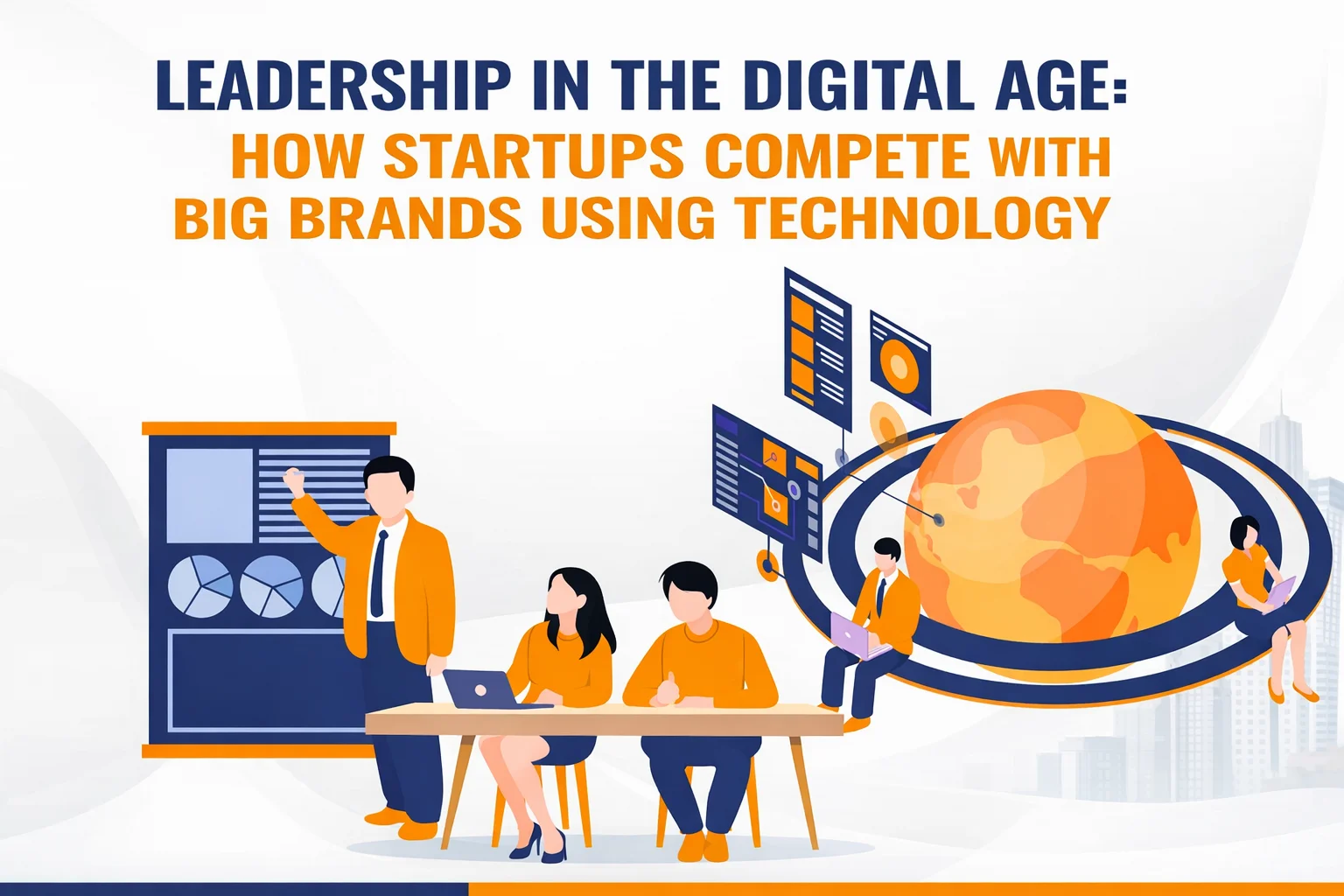
In the modern digital economy, leadership is no longer defined by company size or budget. Instead, success depends on how effectively leaders use technology for startups to drive growth, improve efficiency, and enhance customer experience. With the right digital tools, startups can now compete directly with large enterprises.

Technology as a Growth Equalizer
Access to technology for startups has transformed the competitive landscape. Cloud platforms, CRM systems, AI-driven analytics, and scalable digital tools allow startups to operate efficiently without heavy infrastructure costs. Unlike large corporations tied to legacy systems, startups can implement flexible and scalable technology solutions that grow with the business.
By embracing digital transformation, startups gain speed, agility, and innovation—three major advantages over traditional organizations.
Agile Leadership Beats Big Budgets
Modern startup leadership focuses on agility and data-driven decision-making. Through business automation, startups can streamline operations, reduce repetitive manual tasks, and improve overall productivity.
Automation tools for marketing, sales, and internal processes allow teams to focus on strategy instead of routine work. This efficiency enables startups to move faster than large companies that often face bureaucratic delays.
SEO for Startups: Competing for Visibility
Visibility is critical when competing with established brands. Strong SEO for startups ensures that smaller companies can rank in search engines and attract organic traffic without massive advertising budgets.
By combining search engine optimization with digital marketing automation, startups can target the right audience, generate qualified leads, and build long-term online authority.

Winning Customers with Technology
Today, customers value experience more than brand size. Leveraging customer experience technology—such as CRM platforms, analytics tools, and CRM for startups along with personalization software—helps startups understand user behavior and deliver tailored interactions.
When startups use data intelligently, they can build trust, improve retention, and create meaningful engagement that rivals even the biggest brands.

Building a Technology-First Culture
Successful startup leaders don’t just adopt tools—they build a technology-first culture. Investing early in scalable systems, automation platforms, and analytics solutions ensures sustainable growth. When teams are empowered with the right tech stack, innovation becomes continuous and growth becomes structured.
Leadership That Scales
In today’s competitive landscape, startups that lead with technology don’t just survive—they scale with confidence. By embracing digital transformation and smart automation, startup leaders can compete with big brands, outperform expectations, and create meaningful impact. Smart leadership powered by technology is no longer optional—it’s essential.
The Bottom Line
In the digital age, startups no longer need massive resources to compete with big brands. What they need is forward-thinking leadership that understands the power of technology for startups, embraces business automation, invests in SEO for startups, and leverages customer experience technology.
Technology has shifted the balance of power. Startups that lead with a digital mindset move faster, operate smarter, and scale with confidence. In today’s competitive world, leadership that thinks digital doesn’t just compete—it wins.




Related Posts
Uncategorized
Uncategorized
Uncategorized