
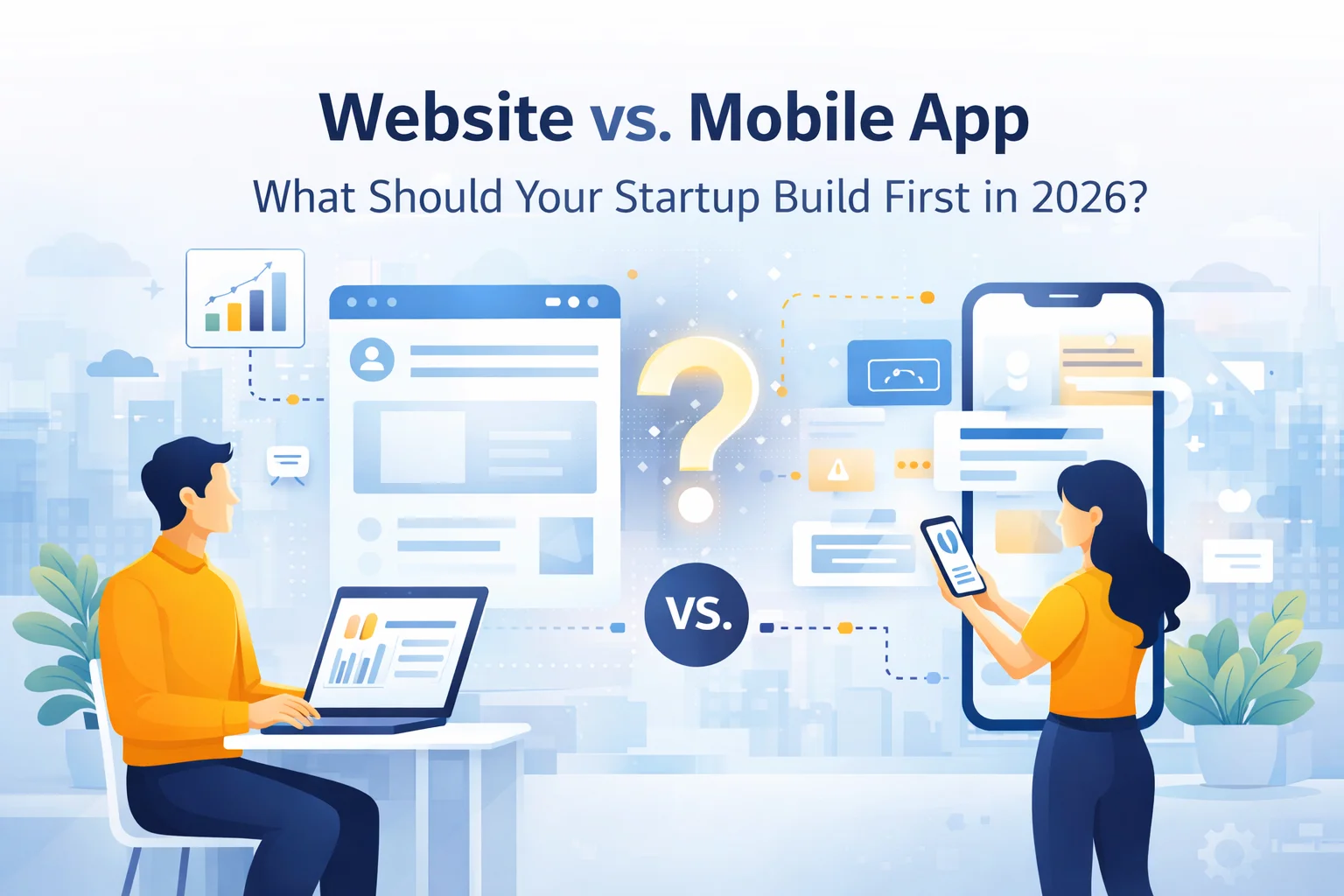
Making the Right Digital Investment for Your Startup’s Success
Every startup founder faces a critical decision early in their journey: should you invest in mobile app development or start with a responsive website? This choice can significantly impact your startup’s growth trajectory, user acquisition costs, and overall success.
At codExalters Techlabs, we’ve guided countless startups through this decision. Here’s everything you need to know to make the right choice for your business.
Understanding the Core Difference
Before diving into the decision-making process, it’s essential to understand what each platform offers:
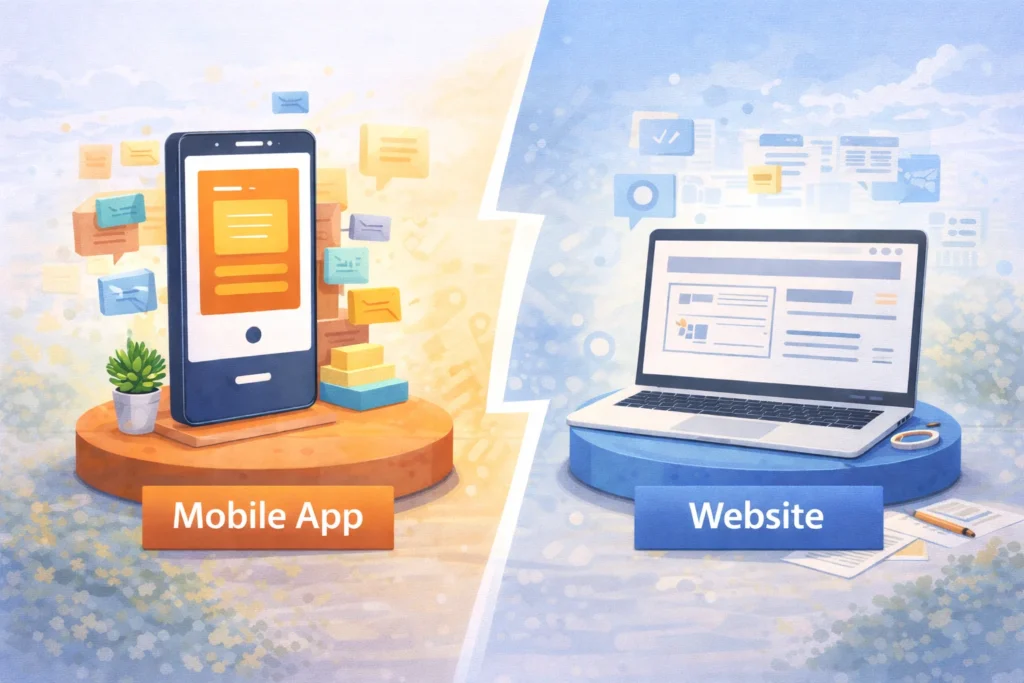
Websites are accessible through web browsers across all devices, require no installation, and are instantly available to users worldwide. They’re your digital storefront that’s always open.
Mobile apps are platform-specific applications downloaded from app stores, living directly on users’ devices and offering deeper integration with device features like cameras, GPS, and push notifications.
When Your Startup Should Build a Website First

1. You’re Testing Market Validation
If you’re still validating your minimum viable product (MVP), a website is your best bet. Web development typically costs 40-60% less than mobile app development, allowing you to test your value proposition without breaking the bank.
Advantages:
- Faster time to market (2-4 weeks vs 3-6 months for apps)
- Lower initial development costs
- Easier to iterate and update based on user feedback
- No app store approval delays
- Better for SEO and organic traffic
2. Your Target Audience Searches for Solutions Online
If your customers discover services through search engines, a website is non-negotiable. Unlike mobile apps, websites can be optimized for search engines, driving organic traffic and building your online presence without paid advertising.
3. You Need Broad Accessibility
Websites work across all devices and operating systems. If you’re targeting a diverse audience using various devices, a cross-platform website ensures everyone can access your service without friction.
4. Your Business Model is Content-Driven
For SaaS startups, blogs, e-commerce platforms, or portfolio sites, websites provide better content management capabilities and discoverability. Your content becomes a powerful tool for inbound marketing and lead generation.
When Your Startup Should Build a Mobile App First

1. You Require Device-Specific Features
If your startup app relies on GPS tracking, camera access, biometric authentication, or offline functionality, a native mobile app is essential. Fitness tracking apps, delivery services, and AR-based solutions fall into this category.
2. You’re Building for High User Engagement
Mobile apps excel at creating habit-forming experiences through push notifications, personalized content, and always-available access. If your business model depends on daily or multiple-times-daily usage, mobile apps drive better retention.
3. Your Monetization Relies on In-App Purchases
Gaming startups, subscription-based services, or platforms with microtransactions benefit from the streamlined payment systems built into app stores.
4. You’re Targeting Mobile-First Markets
In regions where mobile internet usage far exceeds desktop browsing, or for demographics that primarily use smartphones, going mobile-first makes strategic sense.
The Smart Approach: Progressive Web Apps (PWAs)
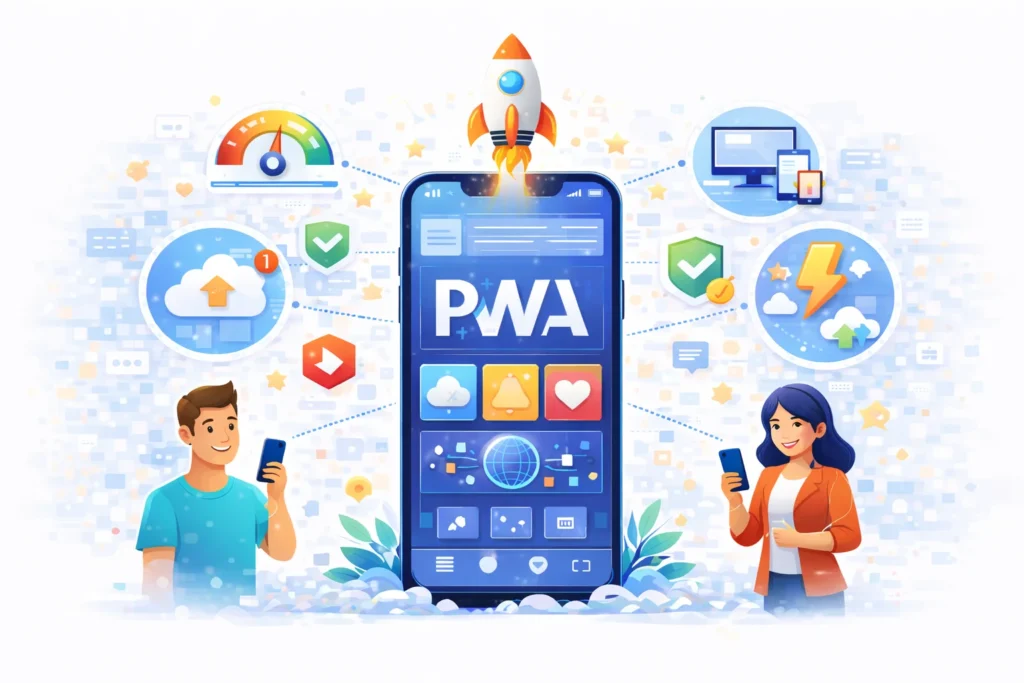
Here’s a startup technology strategy many founders overlook: Progressive Web Apps combine the best of both worlds. PWAs are websites that function like mobile apps, offering:
- Offline functionality
- Push notifications
- Home screen installation
- App-like user experience
- Cross-platform compatibility
- SEO benefits of traditional websites
For budget-conscious startups, PWAs can be an excellent middle ground, costing significantly less than native app development while delivering app-like experiences.
Our Recommendation: The Hybrid Strategy
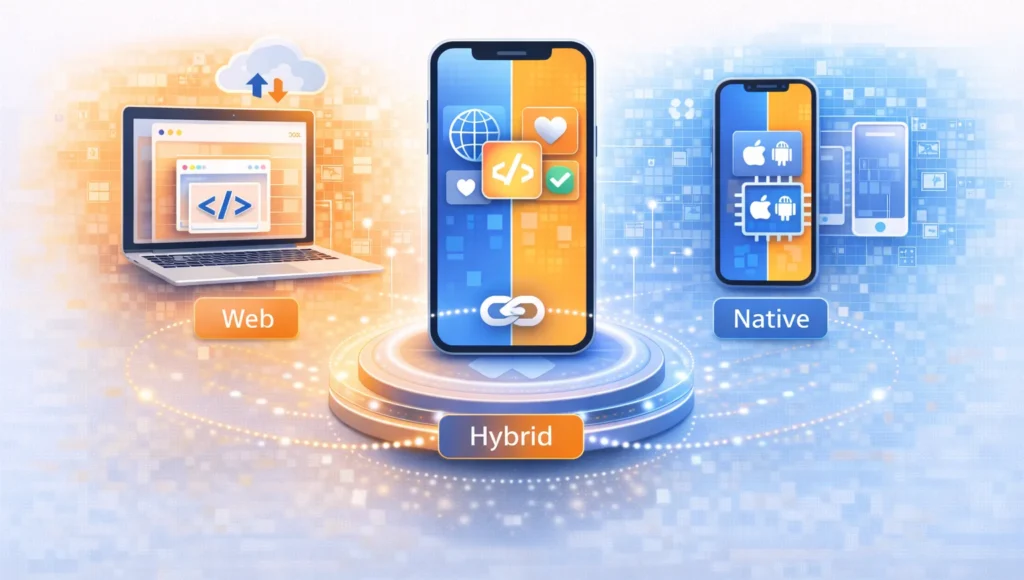
At codExalters Techlabs, we typically recommend this phased approach for most startups:
Phase 1 (Months 0-3): Launch a responsive, SEO-optimized website or PWA. Validate your market, gather user feedback, and build your digital marketing foundation.
Phase 2 (Months 4-6): Analyze user behavior data. Identify whether your users would benefit from app-specific features.
Phase 3 (Months 6+): If data supports it, develop a mobile app for your most engaged user segment while maintaining your web presence for discovery and acquisition.
Key Decision Factors Summary
Choose Website First If:
- You need quick market validation
- SEO and organic traffic are crucial
- Budget is limited
- You’re building a content platform
- Your service doesn’t require device-specific features
Choose Mobile App First If:
- You need GPS, camera, or sensors
- Your business model requires high engagement
- You’re building for mobile-first markets
- Offline functionality is essential
- In-app purchases are your revenue model
Making Your Decision
Ask yourself these critical questions:
- Where does my target audience spend most of their digital time?
- What features are absolutely necessary for my MVP?
- How do users currently discover solutions like mine?
- What’s my realistic budget for the next 6-12 months?
- How quickly do I need to launch?
The Bottom Line
There’s no universal answer to the website vs mobile app debate. Your decision should align with your startup goals, target audience behavior, feature requirements, and budget constraints.
At codExalters techlabs, we specialize in helping startups make data-driven technology decisions. Whether you need a high-converting website, a robust mobile app, or a comprehensive digital strategy, we’re here to transform your vision into reality.
Ready to make the right choice for your startup? Contact our team for a free consultation on your digital product development strategy.
About codExalters Techlabs: We’re a technology partner for ambitious startups, providing end-to-end development services from MVP validation to scalable digital solutions.




Related Posts
Uncategorized
Uncategorized
Uncategorized